28 June 2007

PIFF '07

Reviews from this year's Provincetown International Film Festival...

AN AMERICAN CRIME
Tommy O'Haver's film raises a question I rarely ask of cinema (unless I'm screening shorts, of course): "Did this really need to be made?" It's based on a true story: in 1965, single mother Gertrude Baniszewski (Catherine Keener) not only kept a teenage girl, Sylvia Likens (Ellen Page), locked in her Indianapolis basement and tortured her, but also encouraged her own children to do the same. Framed by a recreation of the subsequent trial against the Baniszewskis, the film recounts how Sylvia first came to live with the family, and brutally details how a combination of jealousy, drug abuse, and maybe even some mental illness resulted in a shocking, landmark child abuse case.

Keener gives a magnificent, understated performance that intriguingly teeters on the brink of nearly making Gertrude a sympathetic figure. Page also continues to show she's a young actress to watch. In fact, the entire film is competent and seems artful, but it's also exceptionally difficult to sit through, at times coming this close to being a snuff film. Some will argue that it has worth as a cautionary tale to the horrors of torture and abuse, but I don't completely buy that—what we get out of AN AMERICAN CRIME is a great performance, a haunting story and an exhaustive litany of atrocious behavior that proves…some people are capable of horrendous things? See the film once for Keener, but only true masochists will want to sit through it a second time. (2.5/5)

THE GREAT WORLD OF SOUND
The title is actually the name of a small record label in the film that bills itself as a "talent search company". Salesmen are hired as "record producers" and trained to audition aspiring musicians whom they encourage to sign up, make a CD and become a star. It also sounds too good to be true, especially when the musicians themselves must put up 30% of the production and distribution costs.

We follow two freshly minted producers: Martin (Pat Healy), who's nebbish, agreeable, young and white (sort of resembling a Gen-X Bob Newhart), and Clarence (Kene Holiday), who's black, older, and far more gregarious. The label sends them to second-tier cities like Birmingham, Alabama to audition hopeful amateurs; naturally, they have to do this in their own hotel room and often without any financial support from the label. The film's hook is that the people auditioning are, with at least two exceptions, the genuine articles—they're actual musicians who responded to a facetious ad placed by the filmmakers. It's a novel idea that plays out beautifully: the actors get to flex their very capable improvisational skills, while we get to explore the parallels between the scams perpetrated within the film and those by the filmmakers.

Pairing up Healy and Holiday seems like an obvious ploy for yin-yang interaction, but both actors successfully enliven their characters. Holiday, in particular, evolves from a sitcom-rote figure to a thunderous, near-tragic entity: his climactic speech to Healy is highly affecting, far-reaching and unsentimental in how it pauses to consider the world beyond the film, not to mention the necessity of some scams. The film drags when the focus shifts to Healy's relationship with his artist girlfriend, but THE GREAT WORLD OF SOUND is mostly enjoyable and more than merely clever: an abiding sense of melancholy favored over cynicism gives it its soul. (4/5)

BORN AGAIN
Markie Hancock's middle-class childhood in Altoona, PA was typical in every way except for one: she was raised as a Fundamentalist Christian. Later, as an adult, she came out as a lesbian and renounced her faith. This documentary is an autobiography of sorts and for the first half, it's your standard low-budget, self-indulgent video essay, combining voiceover narration with ancient home movies, diary entries read aloud to the visual accompaniment of stock footage and the like. Hancock's story takes an interesting turn, though, as she begins to incorporate interviews her family. Her older sibling has also renounced his faith, while her parents and her younger sibling are still devout. What emerges is a portrait of a family ideologically divided, yet one that struggles to uphold a semblance of unity despite that rift. Lucky for Hancock, her family is mostly willing to be candid about how they feel. While making this film is clearly therapeutic and validating for her, for us it's nearly as insightful to watch this dynamic play out and feel its repercussions, both positive and negative. (3/5)

FOUR SHEETS TO THE WIND
Sterlin Harjo's first feature arrives nearly a decade after SMOKE SIGNALS promised a wave of Native American cinema that never really amounted to much. It's another coming-of-age, leaving-the-Reservation tale, this time set and filmed in Oklahoma. The main character, Cufe (Cody Lightning) has just buried his father who had committed suicide. After the funeral, Cufe visits Miri (Tamara Podemski), his estranged older sister, who moved away to Tulsa a few years back. Predictably, he discovers a whole new world in the big city, although he also learns more about the difficulty his sister has had distancing herself from her past.

Workshopped at the Sundance labs, this strikes me as a prototypical Sundance film, particularly one from the days before the festival overflowed with big business and hype. It's sweet, earnest, a little dull but honest. Lightning is an adequate if not all too charismatic lead. However, Podemski deservedly won an acting award at Sundance this year and Jeri Arredondo, who plays Cufe and Miri's mother, is just as good. (3/5)

DEATH AT A FUNERAL
This dyspeptic British comedy regarding a family funeral for a deceased patriarch shouldn't work at all. It has too many characters to respectfully consider, an abundance of outlandish plot twists, and a steady current of lowbrow humor. And yet, it averts disaster (and occasionally soars) simply because it's funny, and consistently so at that. Frank Oz can be hit-and-miss as a director (for every gem in his discography like the underrated WHAT ABOUT BOB, there's a STEPFORD WIVES), but here he's completely suited to the zany pace, nimble construction and delightfully dark tone of Dean Craig's screenplay. The large ensemble cast features a bevy of Brits young and old, but the most inspired work comes from American actors Alan Tudyk (FIREFLY) and Peter Dinklage (THE STATION AGENT): to reveal anything more about their characters would spoil the fun. DEATH AT A FUNERAL is certainly a crowd-pleaser, and I could ramble off a long list of smarter and more nuanced comedies I've seen—but I couldn't tell you the last time I've laughed so hard watching one of them. (3.5/5)

14 June 2007

DAY NIGHT DAY NIGHT


It's ideal to go into Julia Loktev's remarkable debut feature not knowing anything, but it's also damn near impossible to write about it without disclosing key information. (However, basic knowledge of the plot did not seriously lessen the film's impact for me, so SPOILERS AHEAD).

We follow a 19-year-old girl (Luisa Williams), her character only referred to as "She" in the credits. She seems to be on an important mission, training to do something. We watch her receive instructions to carry out, first via phone, then from mysterious figures whose faces are sheathed in black masks. Dropped off in a hotel, She obsessively bathes every crevice of her body and recites cryptic mantras to herself.

It (very) gradually comes into focus that She is a suicide bomber and her instructions are to self-detonate herself in a random crowd of people in congested Times Square. We never fully learn what organization She's doing this for, or even whether its affiliation is religious, political, or other. She also seems to deliberately be a blank slate, devoid of determinable ethnicity or accent. As She reaches her final destination, the film gains intensity and insight as both She and the audience come to terms with the complexity and consequences of what She has set out to do.

The film's methodical pace, muted expressiveness, abundance of close-ups and concern with one's own fate earn the Dreyer and Bresson comparisons it has received; the influence of Iranian cinema is also felt throughout, especially in the oblique and not entirely conclusive narrative. All of these ambiguities may frustrate many viewers, but Loktev has created an original, assured, involving, uncompromising film. It may have a bare-bones style, but there's so much going on here.

07 June 2007

MIX: MYSTERIES

October 2006: CD-R

01. Paul Giovanni, “Lullaby”
02. Belle and Sebastian, “Dress Up In You”
03. The Zombies, “A Rose for Emily”
04. Calexico, “Crumble”
05. Sun Ra, “Space Loneliness”
06. TV On The Radio, “A Method”
07. Luscious Jackson, “Take a Ride”
08. Brian Eno, “The Big Ship”
09. Kings of Convenience, “Summer on the Westhill”
10. Nancy Sinatra, “Bang Bang (My Baby Shot Me Down)”
11. The Velvet Underground, “Jesus”
12. Stereolab, “Metronomic Underground”
13. PJ Harvey, “The Life and Death of Mr. Badmouth”
14. Space Needle, “Never Lonely Alone”
15. Laura Nyro, “Billy’s Blues”
16. John and Beverly Martyn, “Auntie Aviator”
17. Animal Collective, “Loch Raven”
18. Beth Gibbons and Rustin’ Man, “Mysteries”
19. CAN, “Spoon”

Some mixes are tossed off in a week or two (or one particularly obsessive evening); others take much longer to finish. I started this one on a Greyhound bus bound for Manhattan in late April of last year and completed it nearly six months later for a friend’s birthday. Since then, I've played it often, mostly on road trips.

I wanted to craft something that would be ideal for listening to after dark, preferably in the wee, deep hours of the night. I thought back to the 11:00 PM to 3:00 AM shift I worked as a residence hall desk receptionist in the summer of ’95; I also remembered when I used to drive all over Milwaukee at night just to listen to music in the car. My working title for this mix was “Subterranean”, which I thought aptly described the groove I was going for: moody, subdued, hypnotic, chill.

“Lullaby” is a suitably mystifying minute-long snippet from THE WICKER MAN soundtrack (the original, not the negligible Neil LaBute remake); here it’s a prelude, an opening theme song. “Dress Up In You” gently fades in from some seemingly secret, special place, and so it goes, its indie pop bleeding into The Zombies' chamber psychedelia, Luscious Jackson’s stretched-out jam barely separate from Brian Eno’s momentous crawl, the quietly dramatic, a capella finale of VU's “Jesus” giving way to Stereolab’s blips and bleeps. While some mixes are aptly just that—a true blend, all over the map—here I aimed for something coherent, a simmering whole with more flow.

I was in no rush to finish it, knowing I had the time. I'm glad I let it gestate; otherwise, I never would've included the title song, which I owned but barely noticed until it appeared, quite strikingly, in the film RUSSIAN DOLLS; nor would I have ever heard the Space Needle song, which popped up at the last minute in an episode of VERONICA MARS. The final track, "Spoon" also re-entered my consciousness via a movie soundtrack. It carries a little jolt that's somewhat out-of-character for the mix, but I get excited every time it comes on—it's a respite, a diversion, a space to suddenly awaken after nearly dozing off.

03 June 2007

SIGNS OF LIFE

I began working on a review of AWAY FROM HER last week for this blog, but I'm not sure I'll ever finish it. After many false starts--about why Sarah Polley is such a good actress (turned director), why what she's touched upon in the film is so rare and messy and graceful and significant, stumbling to articulate what makes Julie Christie's performance astonishing--I've put it aside. However, I can say that the final shot of two sets of skis, dutifully sloshing through the snow, followed by k.d. lang's version of the old Neil Young song "Helpless" over the closing credits, moved me more than any ending of a film I've seen in ages.

Until the pen starts flowing again, here are some pix I took on a day trip to Gloucester and Rockport over Memorial Day weekend.


22 May 2007

GOODBYE, GIRLS

Soon, my Tuesday nights will be free for the first time in years. GILMORE GIRLS wrapped up a seven-season run last week and tonight a cancelled VERONICA MARS signs off after three.

I watched GILMORE GIRLS from the very first episode: intrigued by a few positive reviews and the promise of incidental music from Sam Phillips on the soundtrack, I was immediately smitten. At its best, the show was steeped with whimsy, yet wry and intelligent. It took place in the small town New England of our wildest dreams, yet it rarely felt false (especially in its earlier seasons), so enticing and rare was its hard-to-pull-off blend of female-bonding/coming-of-age drama and fizzy, screwball humor. I didn’t even particularly notice the trademark, rapid-fire dialogue until someone pointed it out to me in the fourth season; I just naturally took it in as part of the show’s overall allure.

Originally airing on Thursdays against FRIENDS and the still-fairly-new SURVIVOR, I gave GILMORE thirteen episodes to live, at most. However, it survived and prospered (pretty miraculous when you consider the fates of other likeminded low-rated series), moving to Tuesdays the following year and eventually becoming one of the WB’s top-rated shows.

It wasn’t always perfect—one could argue that the rot set in at the start of season six when Lorelei and Rory stopped speaking to one another for eight episodes, and no one could argue that the show didn’t seriously decline a year later when creator Amy Sherman-Palladino abruptly left. But even the final, much-maligned season wasn’t all that bad; on occasion, the simple endurance and resonance of these characters and storylines we had grown to know and love was enough, especially in the show’s sweet, melancholic, true-to-itself finale. Although it was sad to say goodbye to Stars Hollow, the timing was right (lest the show drag on and on past its sell-by-date). Sherman-Palladino has a promising new sitcom premiering in January on Fox starring Parker Posey and Lauren Ambrose; it had better be at least half as good as GG was at its peak.

I didn’t see VERONICA MARS until the first season made its way to DVD. Admittedly, the first few episodes left me a little skeptical (and how could it not with Paris Hilton appearing in the second one?). Midway through the season, however, I was suddenly, absolutely hooked. VM’s first round was a masterful tapestry of teenage noir, father-daughter comradeship, class differences, boy troubles and a nagging, complex (and continually perplexing) mystery. It may have superficially looked like an average WB show, but it sure didn’t feel like one.

The second season let those complexities develop into convolutions (somewhat diminishing the visceral impact that was so integral to the first) while the third season nearly did away with them altogether, struggling along with its heroine to adapt to a different setting. But the show was still always worth watching for the potential of its great, flawed characters. Unfortunately, it was a little too unique to get any more support from its network, hence its inevitable demise. Tonight, I will watch VM’s final two episodes with the friend who initially encouraged me to check out the show, and languidly wish that Veronica, Keith, Wallace, Logan and Mac will all live on tomorrow somehow… perhaps as a comic book?

10 May 2007

IFFB WRAP-UP and more

I've been focusing my attention on the Chlotrudis blog, which I've neglected as of late. Here is my IFFB wrap-up; over there is a list of ten independent films I'm looking forward to seeing this summer.

On the latter post, there's one film I forgot: Gregg Araki's SMILEY FACE. His follow-up to the great MYSTERIOUS SKIN, it sounds about as far away from that film in tone and spirit as one can get: a stoner comedy starring the always-amusing Anna Faris. It apparently comes out in July, although it was originally scheduled for last month, which may be why I missed mentioning it.

26 April 2007

TWO DANISH FILMS


When did the word "melodrama" acquire such a negative connotation? One of the worst things you can currently say about a movie is that it feels melodramatic. In fact, I've praised many a film for not containing a hint of melodrama. However, there have been great, intelligent transcendent melodramas from Sirk to Bergman and beyond; it's just a difficult genre to master.
Danish director Susanne Bier's latest, AFTER THE WEDDING is unabashedly a melodrama but don't let that deter you. Despite a somewhat predictable, occasionally clumsy screenplay, this is far from a made-for Lifetime TV production. All you need to know about the story is that it involves Jacob (Mads Mikkelsen), a manager of an orphanage in India, Jorgen (Rolf Lassgard), a wealthy Copenhagen entrepreneur whom Jacob is seeking a grant from, and a flurry of revelations that come about when the two men meet; prior knowledge of anything else will seriously diminish the film's impact.
It all works because Bier tempers the story's soap opera tendencies with a charged yet intimate style and pace. The camera breathlessly swirls around the action, offering many close-ups of faces (with a particular, peculiar emphasis on the eyes) to the point where it feels like you're watching a less cerebral and austere but just as thoughtful (and wrenching) Bergman film. Mikkelsen and Lassgard are both excellent, as are Sidse Babett Knudsen as Jorgen's wife Helene and Stine Fischer Christensen as their daughter, the youngish, adorably mousy Anna. AFTER THE WEDDING is a lesser, more conventional film than Bier's previous one, BROTHERS, but it's also a good, accomplished melodrama made by people who know what they're doing.

Bier's longtime co-screenwriter Anders Thomas Jensen is director in his own right, but his exceedingly black comedies have very little melodrama in them. The narrative of ADAM'S APPLES sounds like a sick joke (and that's exactly what it is): Adam (Ulrich Thomsen), a paunchy, middle-aged Neo-Nazi, is released from prison and sent to do community service in a rural church presided over by his opposite in temperament, Ivan (Mikkelsen again). The latter is a cheery priest who suffers from grand delusions that all of the bad things happening to him are a test from God. It's a rather silly, broad film, but at the very least, Jensen creates a delightfully absurd tone, whether he's needlessly killing a somnambulant cat or daring us not to laugh at a brain damaged child. Someday he may even make a great, biting satire. This isn't one, but it has a lot to recommend it: gorgeous scenery and cinematography, a deft, brave comic turn from Mikkelsen, and some inspired lunacy here and there—much of it involving a cover of a certain Bee Gees song. Oh, those wacky Danes.

24 April 2007

EMPIRE

26 March 2007

C.R.A.Z.Y.


In the last decade or two we've seen so many coming out stories on film (and coming of age stories in general) that we shouldn't expect any new ones to tell us something we don't already know. Jean-Marc Vallée's C.R.A.Z.Y. (the title is an ingenuous pun spelt out at the closing credits), a French-Canadian production that's finally been released in the U.S., really shouldn't work: its main character, Zac, is the fourth of five boys (and the only gay one) in a Catholic Montreal family. Opening with his birth on Christmas, 1960, and spanning the next twenty-odd years, the film is about Zac's struggle with his sexuality and his yearning for acceptance and understanding from his cool but rigid father, Gervais (Michel Côté), whom he idolizes.

And yet, despite the overly familiar sounding premise, C.R.A.Z.Y. is actually a refreshing, marvelous film that gets nearly every detail right. It expresses an uncommonly vivid sense of Zac's evolving persona and the internal and external conflicts it causes. Unlike others tales of this ilk where accepting one's own identity (sexual or otherwise) is executed with all the grace and profundity of a neatly tied-up sitcom punchline, this one incorporates pivotal moments in the protagonist's search for himself (getting caught dressed up in his mother's clothes by his father at age six, for instance) with smaller, less showy incidents (a teenager's slight change of hairstyle or wardrobe) to present a character that's always growing, sometimes regressing, and often questioning who he is and what he wants to be. It sounds like the simplest thing in the world, but few films dig this deep and remain so consistent and involving.

While Zac's sexuality is the film's central narrative strand, it's far from the only one. C.R.A.Z.Y. works primarily because it considers so much else. It explores the dynamics of a large family from a distinctively Quebecois Catholic perspective—father/son, mother/son, husband/wife and brother/brother are all given their due. It also lovingly (and from what I've read, most accurately) recreates suburban Montreal of the 1960s and 1970s, nailing the period style and kitsch without seeming secondhand. And speaking of style, Vallée has fashioned a world via cinema that feels like a truly fabulous cross between a David Sedaris childhood essay and a Todd Haynes film (particularly VELVET GOLDMINE). He fluidly mixes the surreal (you've only previously imagined of hearing The Rolling Stones' "Sympathy For The Devil" in such a context) with a textural sense of place and sets it all to a thrilling, expansive soundtrack (including Patsy Cline, Pink Floyd, Charles Aznavour, The Cure, and a reoccurring, goosebump-raising chorale piece) that always belongs to the scene it scores, never feeling intrusive nor like an afterthought.

The film also benefits from a solid cast. Côté, perhaps, leaves the strongest impression as Gervais, a fantastic yet flawed father, utterly humane and sympathetic in wanting the best for his boys but tragically stuck in his old-fashioned, machismo-driven perception of what that is. As Zac, Marc-André Grondin convincingly articulates the subtleties of his character's journey from a somewhat green, goofy 15 year-old to a more confident (and far more conflicted) young adult. Danielle Proulx is simply wonderful and winning as the mother, a housewife who becomes as Zac's co-conspirator, champion, and spiritual conduit.

Despite the language barrier, the numerous cultural differences (do they really eat ironed toast in Quebec?) and its straight-to-DVD release in this country, hopefully C.R.A.Z.Y. won't have difficulty finding an American audience (no matter how cultish). It never condescends to its viewers, nor does it have any of that "this is my important life story" self-indulgence. The plainspoken, disaffected narration throughout perfectly compliments what is essentially a humble film, a celebration of being different by emphasizing how normal it is that we're all individually unique. It has a tender soul beaming through all of its quirky humor, especially when the teenaged Zac says, a little mournfully, "I just want to be like everyone else"; the person he confides this to wisely reassures him,"Thank God, you never will."

22 March 2007

NORTHAMPTON THAW

I took these on my birthday last month, 100 miles west of home--something to fill this space until I start making more time to write again.


15 February 2007

EXPLORING THE NEW ICA

Nearly a decade in Boston, and I’d never set foot in the Institute of Contemporary Art (ICA). I’d walked past the old firehouse on Boylston Street (where it was housed until recently) many times, but I never made an effort to check it out—and I like contemporary art, even if I don’t know much beyond Warhol and Rothko.


The ICA moved into fancy new digs along the South Boston waterfront last December. I remember seeing it as an unconventionally shaped, abstract work-in-progress last summer and thinking, “That’s it?” Of course, the new facility is itself a work of art (much like what Santiago Calatrava added on to my hometown’s art museum). All of the galleries are on the top-heavy fourth floor; the third hosts a spacious, airy theatre/performance space, the second has a digital studio and the first is home to all the usual museum amenities (gift shop, restaurant, etc;).

Although the ICA is a relatively small museum, the main East and West Galleries hold so much stuff they’re a little overwhelming. Every medium is adequately represented in the permanent collection, from painting and photography to sculpture and video installation.

As for special exhibitions, there’s a “Tropicalounge” by groovy Brazilian artist Sergio Vega (complete with vintage album covers from that other Sergio au go-go, Mendes), and work from four upcoming artists vying for the James and Audrey Foster Prize. Kelly Sherman's minimalist pieces won the award earlier this week, but my favorite was Rachel Perry Welty’s work with disposable objects (like twist ties) and the fascinating “Food Pyramid”, a painstakingly intricate arrangement of miniature versions of grocery-store product boxes.

However, what really moved me to check out the ICA was a movie. They're beginning to show feature films on Sunday afternoons, and I caught the documentary WHO THE $#%& IS JACKSON POLLOCK. It had played at the Provincetown film fest last summer and was picked up for distribution by Picturehouse (the folks who brought you A PRAIRIE HOME COMPANION) shortly thereafter. I’m surprised they haven’t given it a wider release, for it’s a wonderful documentary that deserves at least a SHUT UP AND SING-sized audience.


POLLOCK profiles the inimitable Teri Horton, a retired truck driver and junk collector who bought a painting at a thrift shop for five bucks. When someone tells her the giant, messy splattered canvas looks an awful lot like a Jackson Pollock (prompting a response that gives the film its title), Horton sets off to determine just how much her find is worth.

According to the hermetic New York art elite, it's not worth anything, even as Horton slowly gathers the support of outsiders and some forensic evidence in her favor. More than just an amusing character study, the film gives insight as to how art acquires (and requires) legitimization. Horton obviously doesn't fit the mold of the respectable art collector, but her story is fleshed out to the point that she always endears, even when she's duplicitous: her tale of the artwork's origin (made up to account for the lack of provenance) is a highlight, particularly because even she knows how ridiculous it is. Her quest may never amount to a multi-million dollar payoff, but POLLOCK shows us the struggle here is as worthy as any goal.

01 February 2007

3 WOMEN


Spooky, huh. My essay on Robert Altman's 1977 film (starring Shelly Duvall and Sissy Spacek, above) is up on the Brattle's Film Notes blog. It's certainly on my shortlist of favorite Altman, along with McCABE & MS. MILLER, THE LONG GOODBYE, NASHVILLE and GOSFORD PARK. For years, I never knew it existed because it was impossible to see outside repertory houses and film archives. It finally came out on an adequate (not deluxe) Criterion Collection DVD three years ago. Thanks to my Amazon.com wish list, more than one person gave it to me as a gift this past Christmas.

19 January 2007

FOR YOUR CONSIDERATION...

No Oscar predictions from me this year. Instead, a list of who should be nominated.


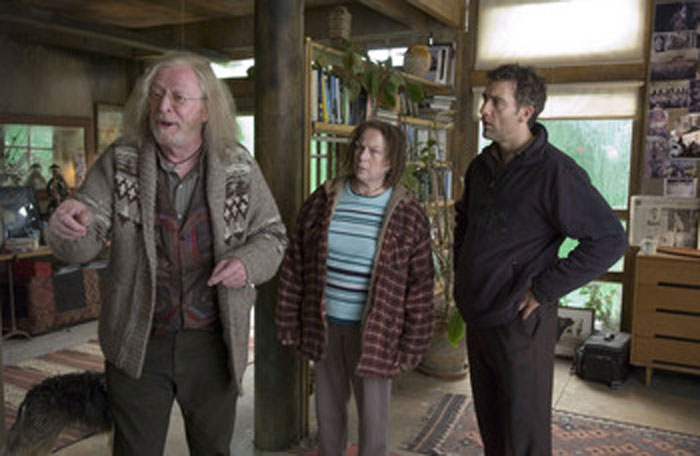
Michael Caine (left) says, "Don't forget about me! Who knew I'd be so bloody brilliant in CHILDREN OF MEN?"

BEST SUPPORTING ACTOR

Alan Arkin – LITTLE MISS SUNSHINE
Michael Caine – CHILDREN OF MEN
Jackie Earle Haley – LITTLE CHILDREN
Nick Nolte – CLEAN
Anthony Mackie – HALF NELSON

Arkin and Haley are likely to get nominations, but Mackie will get overlooked by his co-stars. Nolte’s performance is all the more impressive because I would’ve never guessed he had it in him. That goes double for Caine, who leaves a stronger mark in his ten minutes on screen here than he did in the entirety of THE CIDER HOUSE RULES.

BEST SUPPORTING ACTRESS

Rinko Kikuchi - BABEL
Jennifer Hudson – DREAMGIRLS
Catherine O’Hara – FOR YOUR CONSIDERATION
Zoe Weizenbaum – TWELVE AND HOLDING
Carmen Maura – VOLVER

Hudson will deservedly get nominated and likely win; same goes for Kikuchi, though she’ll probably lose. We’ve all thought, “Wouldn’t it be a gas to see O’Hara get a nod?” for her juicy self-referential part, but I don’t think the Academy is that subversive. If more than 12 people saw Weizenbaum’s film, she’d be in the running.

BEST ACTOR

Gael Garcia Bernal – THE SCIENCE OF SLEEP
Steve Coogan – TRISTRAM SHANDY: A COCK AND BULL STORY
Ryan Gosling – HALF NELSON
Jeremie Renier – L’ENFANT
Patrick Wilson – LITTLE CHILDREN

Not even Gosling is a sure thing here, although if he doesn’t get a nomination it’ll be the year's gravest disappointment come Tuesday morning. As much as I adore Kate Winslet in LITTLE CHILDREN, her co-star should be receiving that kind of attention and praise.

BEST ACTRESS

Maggie Cheung – CLEAN
Laura Dern – INLAND EMPIRE
Shareeka Epps – HALF NELSON
Sandra Huller – REQUIEM
Helen Mirren – THE QUEEN

So bountiful was this year’s selection of lead actresses that I would also include Penelope Cruz (VOLVER) and Ellen Page (HARD CANDY) if the Academy would bend the rules and allow seven nominees. Mirren’s already a lock to win and I wish her the best. My other picks don’t stand a chance to be nominated, despite David Lynch’s cow-on-Sunset-Boulevard-stunt for Dern.

BEST DIRECTOR

Pedro Almodovar – VOLVER
Alfonso Cuaron – CHILDREN OF MEN
Fernando Eimbcke – DUCK SEASON
Ryan Fleck – HALF NELSON
David Lynch – INLAND EMPIRE

If Almodovar can get one of these for TALK TO HER, he could surely do so again. You have to admit this group is far more exciting than Frears, Eastwood, Inarittu, etc; (and no, I haven’t seen THE DEPARTED yet).

BEST PICTURE

CLEAN
DUCK SEASON
HALF NELSON
SHORTBUS
VOLVER

Hmm, this list vaguely resembles the Chlotrudis Award nominees for Best Movie…

11 January 2007

CLIMATES and others

I’ve been trying to cram in as many 2006 films as I can before Chlotrudis Award nominations are due. Here’s everything I’ve seen since the first of the month, including my first film of 2007.


CLIMATES

I admit to nodding off during Turkish director Nuri Bilge Ceylan’s last film, DISTANT. I came close to doing so again during his new one—the languid, lulling pace is probably to blame—but I enjoyed it a great deal more. It opens with Asi and Bahar, a couple (played respectively by Ceylan and his wife, Ebru) vacationing in a coastal part of Turkey during the summer; it concludes with them saying goodbye (possibly for the final time) in a mountainous part of the country in winter. In between those two cyclical extremes, we witness the dissolution of their relationship. This includes not only their breakup, but smaller, far subtler details like the change in emotion and altered chemistry when they fleetingly reunite towards the end.

As a director, Ceylan’s visual sense is extraordinary yet unflashy, giving both pretty and banal images equal weight and depth. The sound design is also exceptional: you will never again hear the crack of a pine nut being eaten without thinking of this film’s most thrilling, surprising, sexually charged scene. What really gives CLIMATES an edge, however, is the director’s empathy towards his characters, no matter how poorly or erratically they sometimes behave. As a real couple portraying a fictional one, Ceylan and his wife are convincing without making the viewer feel too voyeuristic. And as for that languid pacing, Ceylan shrewdly throws enough abrupt, interesting twists into his narrative to keep it involving while remaining artful and contemplative. Grade: A-

CHANGING TIMES

Andre Techine’s latest reunites Catharine Deneuve and Gerard Depardieu as once-lovers who meet up after three decades apart. Actually, Depardieu’s never gotten over Deneuve, so he rashly, passionately pursues her in Tangiers, where she now lives with her younger husband, played by a potent Gilbert Melki. The two leads are as compatible ever, but Techine fleshes out this simple story with a subplot about Deneuve’s son, his girlfriend and the girlfriend’s twin sister (both played by the talented Lubna Azabal). It doesn’t necessarily echo the primary story, but it contributes to a study of human relationships nearly as thoughtful and nuanced as the one other Techine film I’ve seen, the great WILD REEDS. Grade: A-

THE OH IN OHIO

Stars a rarely-better Parker Posey as a Cleveland ad exec who has never had an orgasm, ever. A thin premise and somewhat clumsy script are enlivened by a decent cast: Paul Rudd (shlubby and nearly unrecognizable with copious facial hair) as her frustrated high school biology teacher husband, Mischa Barton as his precocious, seductive student (well-cast though her acting’s still shaky) and Danny DeVito as an unexpectedly charming swimming pool mogul. Plus a cameo from Liza Minnelli (it’s too much fun to give away what she’s doing here). This is a good vehicle for the oft-misused Posey; once you get past its silliness and first-time-filmmaker discrepancies, it’s refreshingly sweet and likable, if still slight. Grade: B-

HEADING SOUTH

Laurent Cantet follows up his intriguing, sparse film TIME OUT with something a little different: an adaptation of a series of short stories about middle-aged American women vacationing at the Haitian resort in the late 1970s. The main attraction is not the sea or the sun but the sex, primarily with young unemployed Haitian men. Charlotte Rampling continues an impressive recent run of performances here as the domineering Ellen, while Karen Young is nearly as good as her more idealistic rival Brenda. Cantet adequately scrutinizes the cultural politics of the region and time, but the most effective moments come from confessional first-person monologues for most of the characters. Spliced into the film, they’re an arresting counterpoint to the main flow of action. Grade: B+

THE DEATH OF MR. LAZARESCU

The most critically acclaimed film of the year is a 150-minute tale of a Romanian man slowly dying as he’s shuffled through the country’s monstrously bureaucratic health care system. You can see why it sat on my shelf for nearly three months before I got around to watching it. I can see the film’s allure, though I’m sorry to say the critics have overrated it somewhat. I would’ve shaved off most of the first 45 minutes which consist of the title character in his apartment, getting sick, waiting, waiting, waiting for an ambulance. The film takes off once he’s on his way to the first of many hospitals, aided by a dedicated, if not entirely sympathetic nurse (the superb Luminita Gheorghiu). Like a Bresson film but with exceedingly dark, satirical humor, LAZARESCU is a telling, biting critique, but it could've been tighter. Grade: B

03 January 2007

THE BEST FILMS OF 2006

THE TOP TEN:


1. DUCK SEASON
In this minimalist black-and-white gem from Mexico, two fourteen-year-old boys have an apartment to themselves on a Sunday afternoon. They spend the day playing video games, drinking Cokes and ordering out for pizza, and are soon joined by an older female neighbor and a hapless delivery man. Then, the power goes out and they’re left to find other ways to pass the time. The narrative may sound slight, but director/screenwriter Fernando Eimbcke fully develops and endears these four characters to us to the point where we just don’t want to leave them behind. In fact, the beauty here lies in what the characters themselves have to regrettably leave behind (and what one of them claims for himself). Nearly ten months since I first saw it, DUCK SEASON still reminds me why I value tiny, little-seen independent films so much.


2. HALF NELSON
How do you make a film about a white Brooklyn junior high school teacher struggling with drug addiction without alienating your audience? How do you depict that teacher as a genuine mentor to one his black female students without your premise becoming a sentimental, falsely inspirational tale like DANGEROUS MINDS? Director Ryan Fleck and his co-screenwriter/producer Anna Boden manage to do both in this masterful, audacious feature: they take the frustration of the age and transform it into a poetic, unflinching study of how we live with it, and how we can find redemption through the support of others. Ryan Gosling and Anthony Mackie both give remarkably nuanced, career-best performances, while impressive young newcomer Shareeka Epps shows no sweat in matching them.


3. CACHE
I left the theater baffled and speechless but nonetheless intrigued when I first saw this in Toronto in 2005. On a second viewing in Boston this past January, I got it. At first, director Michael Haneke’s film is a portrait of a smug bourgeois couple (Daniel Auteuil and Juliet Binoche) being watched by an unknown assailant. They receive cryptic letters and videotaped stalker footage of their apartment in the mail, but as Auteuil’s character gradually becomes unhinged, the film reveals itself as an allegory about social responsibility and guilt. With its suspenseful pacing and occasionally shocking developments (both times I saw this in a theatre, I’ve never heard an entire audience gasp so loudly), CACHE is a thriller in every sense of the word.


4. 49 UP
Last month, I named The “Up” Series my favorite documentary of all time, and this latest installment had a lot to do with that decision. Helmed by director Michael Apted, the series interviews the same group of about a dozen citizens originally from the UK every seven years. At the age of 49, we’re really starting to understand the philosophical implications and psychological effects these subjects experience by having their lives put on display. As usual, Apted alternates between the present and flashbacks of earlier installments, only the cumulative pull is now richer and more profound. If there’s any proof that this is so much more than an experiment, it’s in Jackie’s outburst when she startlingly confronts Apted about his interviewing methods.


5. VOLVER
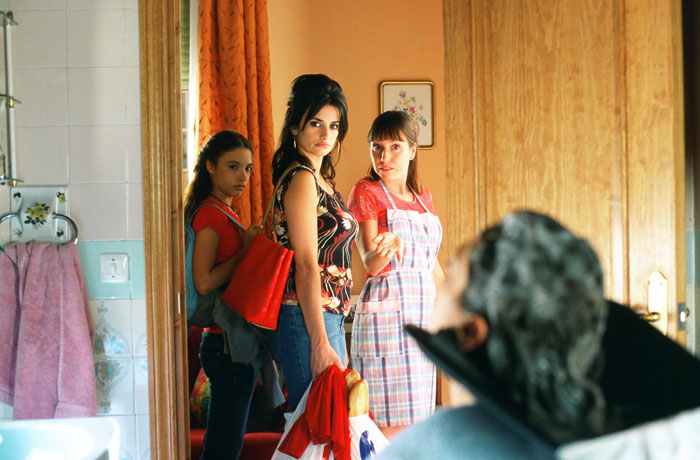
What an appropriate title: this is a glorious return to form for Pedro Almodovar after the accomplished but curiously remote BAD EDUCATION. A vivacious and unexpectedly multifaceted Penelope Cruz heads an excellent female ensemble cast; other standouts include the marvelously expressive Lola Duenas and the great Carmen Maura, working with the director on what could be his best picture since her last one with him, 1988’s WOMEN ON THE VERGE OF A NERVOUS BREAKDOWN. It’s as graceful as the powerful, meditative shots of rotating windmills that appear throughout, but just as lively and hilarious, tempering the melodrama of his mature period with sharp, rapid-fire dialogue.


6. SHORTBUS
The cast is inconsistent, a few of the actors are a little too attractive, and the various narrative strands wrap up all too neatly. And none of that matters because John Cameron Mitchell’s second film has a sweet, beaming heart and a novel sense of camaraderie that transcends those minor annoyances. SHORTBUS is a romantic comedy like any of the best, only with graphic sex and money shots. As in HEDWIG AND THE ANGRY INCH, Mitchell gives an emphatic voice to the underground—the gays, freaks, weirdoes and eccentrics—and to a real post-9/11 New York. More importantly, he takes a misunderstood subject often depicted as taboo and simply celebrates it for what it is.


7. THE CASE OF THE GRINNING CAT
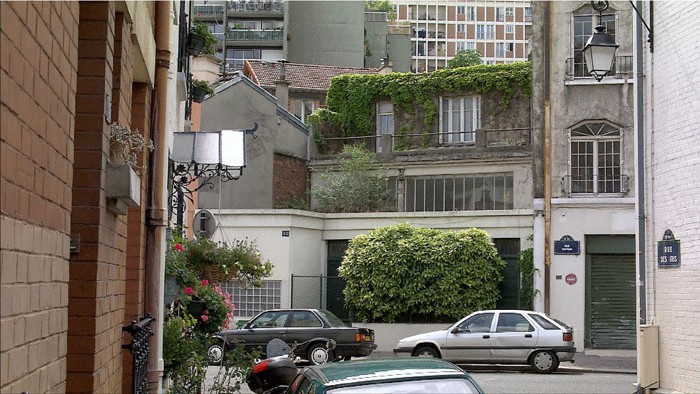
As for post-9/11 France, who better to document the country’s social climate than the venerable Chris Marker? Similar to the personal tone and whimsical spirit of Agnes Varda’s THE GLEANERS AND I, this utilizes the sudden appearance of a graffiti Cheshire cat on a slew of Parisian buildings and public spaces as a jumping-off point. From there, Marker intelligently muses on everything from homeland security and AIDS to France’s minority groups and the country’s 2002 presidential election. Lithe yet sustaining, this could be a delightful capper to the director’s vast oeuvre—it’s already one of the quintessential cinematic essays.


8. CLEAN
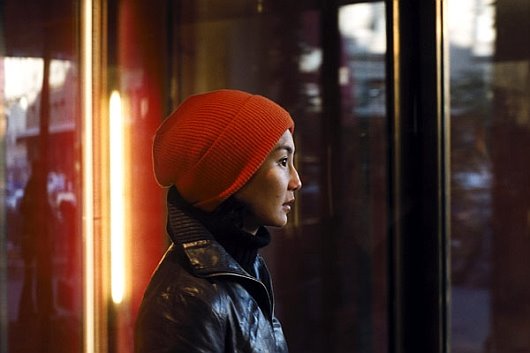
Its impact has diminished somewhat since I first saw it two summers ago, but Olivier Assayas’ film (belatedly released in the U.S.) still holds up—as a choice vehicle for the director’s ex-wife Maggie Cheung, and as an uncommonly insightful and realistic study of drug addiction and recovery. In a gentle supporting role, Nick Nolte does some of his best work ever, while Assayas constructs an arresting visual tableau of glowing oil refineries and claustrophobic Parisian streets. The rare film that doesn’t demean or punish its junkie protagonist, CLEAN is a delicately executed drama, a breath of fresh air.


9. THIS FILM IS NOT YET RATED
To criticize documentary filmmaker Kirby Dick for being self-indulgent is to entirely miss the point of his entertaining, scathing expose of the MPAA, which is to show how unfair and ethically bankrupt the agency is, particularly toward independent filmmakers. Structured like a Michael Moore piece (but without the patronizing tone), Dick uses the usual graphics, found footage and talking heads interviews to give us an enlightening, detailed history of film censorship in America, and that's fine. However, what really sets it apart is his employment of a detective to find out how this secretive watchdog group works (not to mention just who its members are). The provocative results may raise any rational viewer's blood pressure.


10. INLAND EMPIRE
I nearly considered making this a tie with CHILDREN OF MEN, but where Alfonso Cuaron's equally (albeit much different) visionary fable gets a little goopy in the end, this one's almost rapturous conclusion approaches the ethereal and the divine. Lynch's three-hour avant-garde digital video mindfuck is a deserved, dazzling showcase for Laura Dern (and her multiple onscreen personalities) but also probably his most ambitious, farthest-reaching plunge into the unknown. Not yet nearly as resonant (or comprehensible) as MULHOLLAND DRIVE, I remain utterly bewitched by it.

TIED FOR 11TH PLACE:

CHILDREN OF MEN
Both a visual and conceptual breakthrough, and frighteningly plausible. Almost unrecognizable (except for that voice), Michael Caine is shockingly good in a supporting role.

THE QUEEN
Helen Mirren really is that good in the best British film in years not directed by Mike Leigh.

REQUIEM
A superior exorcist film notable for an astonishing lead performance from Sandra Huller, but also in how it lovingly recreates early '70s Germany without a hint of kitsch.

HONORABLE MENTIONS:

L’ENFANT
A deserving Palme D'or winner at Cannes in 2005, and possibly the Dardenne Brothers' most emotionally involving work to date.

TRISTRAM SHANDY: A COCK AND BULL STORY
Utter nonsense of course, but endlessly inventive. Steve Coogan needs more projects like this.

OLD JOY
Even if you don't care much about the characters in the end, you can't deny the poignant simplicity of Kelly Reichardt's film--an austere, introspective counterpart to HALF NELSON.

MUTUAL APPRECIATION
An encouraging advance on FUNNY HA HA; I can't wait for Andrew Bujalski's next project.

51 BIRCH STREET
The best family study since CAPTURING THE FRIEDMANS--not as cathartic, but certainly more personal (not to mention ethically sound).

SHUT UP AND SING
A riveting peek into the country music industry and the indestructible yet disarmingly humane Natalie Maines.

THE LIFE OF REILLY
Just Charles Nelson Reilly doing his one-man show on stage--brilliantly.

THE YACOUBIAN BUILDING
Fascinating Egpytian epic of the sort no one makes anymore. No wonder it's still without US distribution.

NIGHT OF TRUTH
Compelling African film about reconciliation rather than war, although it's shrewd enough to know that sentiments stirred up by the latter never entirely evaporate.

SMALL TOWN GAY BAR
Immensely touching documentary about gay bars in rural Mississippi that I hope everyone gets to see in 2007.

ALSO RECOMMENDED:
(these films received at least 4 stars out of 5)

A PRAIRIE HOME COMPANION
AN INCONVENIENT TRUTH
BROTHERS OF THE HEAD
THE DEVIL AND DANIEL JOHNSTON
FAT GIRLS
HARD CANDY
HEADING SOUTH
L’INTRUS
THE KING
LA MOUSTACHE
LITTLE CHILDREN
LITTLE MISS SUNSHINE
LONESOME JIM
NEW YORK DOLL
THE PUFFY CHAIR
RUSSIAN DOLLS
THE SCIENCE OF SLEEP
SIR! NO SIR!
SISTERS-IN-LAW
SORRY, HATERS
SYNDROMES AND A CENTURY
TWELVE AND HOLDING
WORDPLAY

And finally, a special mention to Jean-Pierre Melville's ARMY OF SHADOWS. I don't care if it wasn't released in the US until this past year--I just can't place a film made in 1969 on my top ten list of 2006. But I have to admit it would give DUCK SEASON serious competition for the number one slot.